As AI-driven innovation accelerates, companies like Mediphage are leveraging these technologies to enhance efficiency in bio-manufacturing and gene therapy. Lee Bowman, Chief Operating Officer at Mediphage, recently shared his insights on the transformative impact of AI and machine learning (ML) in genetic medicine, the challenges facing the industry, and the critical role of strategic collaboration.
Run a pilot, explore the data, and begin forming the right collaborations. The industry is evolving rapidly, and those who take initiative will be best positioned to lead the transformation.
Breaking Down Barriers to Innovation
One of the primary obstacles to AI adoption in biotech is the time required to integrate new technologies into existing research and development (R&D) frameworks. While funding and talent acquisition remain challenges, Bowman emphasizes that the real bottleneck lies in getting these advanced tools into the hands of researchers.
“We’re priming the engine,” Bowman explains. “It’s about ensuring researchers who previously didn’t have access to this technology can start experimenting. My advice? Don’t wait until you have three years of structured data. Start a pilot, ingest some data, and begin the conversation between your product development, process development, and AI ML teams.”
By fostering collaboration between AI specialists and life sciences researchers, companies can bridge the gap between computational modeling and biotechnological applications. Bowman highlights the importance of establishing a shared language between these fields to accelerate integration and maximize impact.

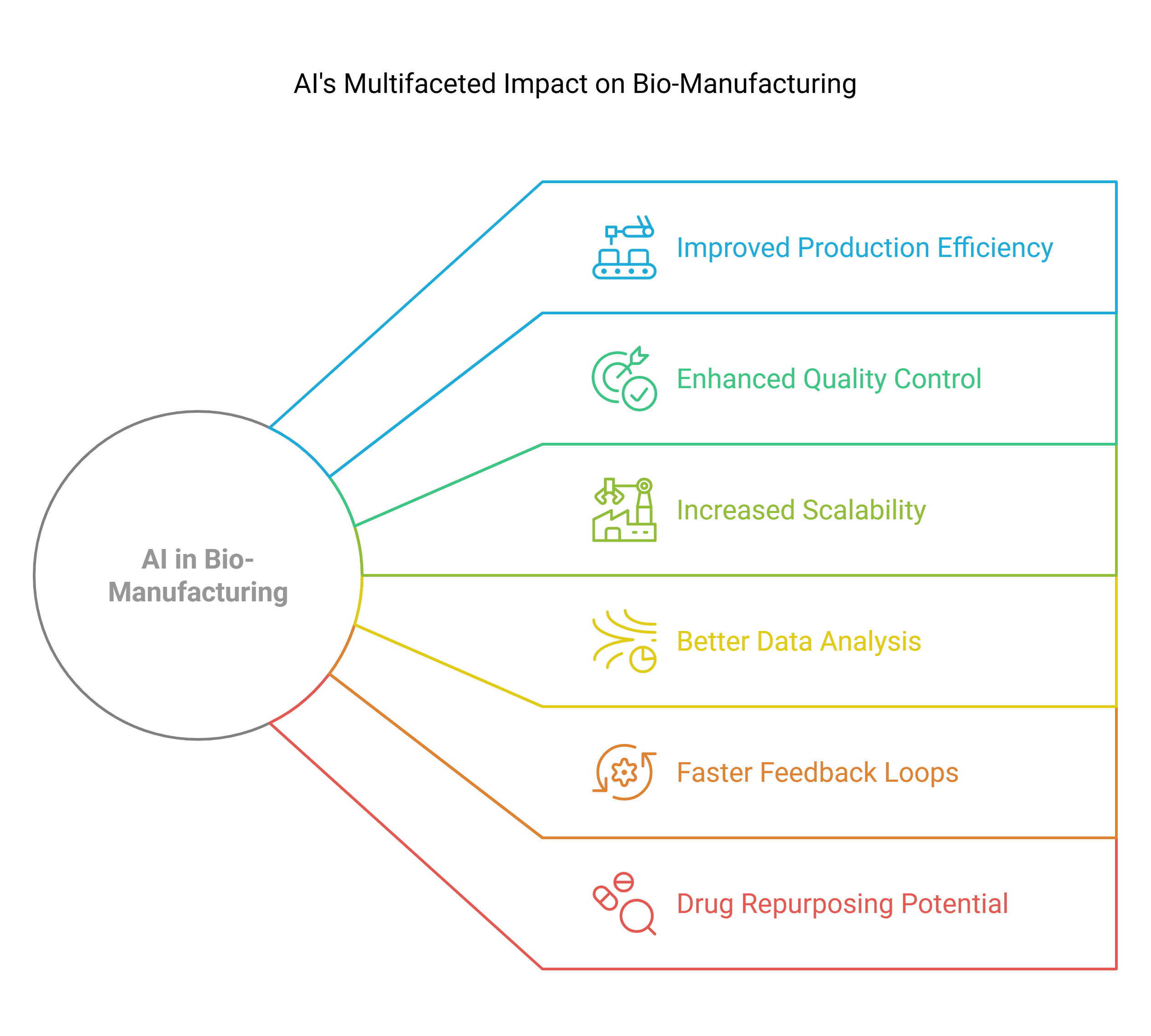
The Role of AI in Bio-Manufacturing
Strategic Partnerships: A Catalyst for Growth
For smaller biotech firms, internalizing an entire AI development team is often impractical. Instead, partnerships with AI specialists provide a viable pathway to leveraging advanced computational tools without straining resources. According to Bowman, these collaborations are not only cost-effective but also instrumental in driving innovation.
“As a small company, one of the biggest challenges is knowing what to say no to,” Bowman remarks. “There’s always a temptation to chase every new idea, but strategic focus is key. By working with AI specialists and leveraging non-dilutive funding opportunities, we can make smarter decisions on where to allocate resources, ensuring we bring our technology to market efficiently.”
These partnerships also enable Mediphage to support larger pharmaceutical and biotech firms by providing the materials and insights necessary for further development. As Bowman notes, “Large Pharma will get to the clinic much faster than we can, but by supplying them with what they need, we play a vital role in accelerating the entire industry.”
There’s always a temptation to chase every new idea, but strategic focus is key. By working with AI specialists and leveraging non-dilutive funding opportunities, we can make smarter decisions on where to allocate resources, ensuring we bring our technology to market efficiently.
The Future of AI in Biotech
Despite the promise of AI in genetic medicine, Bowman acknowledges that significant hurdles remain. The loss of industrial knowledge due to retirements and a lack of structured knowledge transfer poses a risk to innovation. “Some of our greatest resources are the people who’ve been in the industry for decades,” he says. “Their experience and intuition can’t be fully captured by technology alone. It’s critical to engage these experts and ensure their insights are preserved for the next generation.”
Looking ahead, AI will continue to play a crucial role in streamlining bio-manufacturing, improving drug discovery, and enabling personalized medicine. However, success in this space requires a proactive approach. “Just get started,” Bowman urges. “Run a pilot, explore the data, and begin forming the right collaborations. The industry is evolving rapidly, and those who take initiative will be best positioned to lead the transformation.”
The integration of AI and biotechnology is no longer a futuristic concept, it is happening now. Companies like Mediphage, in collaboration with AI companies such as Katalyze AI, are paving the way for a more efficient, scalable, and innovative approach to genetic medicine. As AI adoption continues to expand, embracing an experimental and collaborative mindset will be key to unlocking the full potential of these groundbreaking technologies.